
The International Master’s Program in Nuclear Security
The International Master’s Program in Nuclear Security was launched in January 2016 with the active support of the International Atomic Energy Agency (IAEA) in Vienna and the Government of Bulgaria. It was established to train highly qualified professionals for managerial positions in the nuclear security sector and related industries.
More about the program
The master's program was established as a result of a cooperation agreement between UNWE and the International Atomic Energy Agency (IAEA), signed in 2014 and renewed in 2019. The signing took place during an official visit to Bulgaria from June 30 to July 1, 2014. It is part of the master's program in “Defense and Security Economics” and is implemented by the Department of National and Regional Security, which is a member of the international INSEN network, uniting over 45 countries and more than 120 organizations in the field of nuclear security.
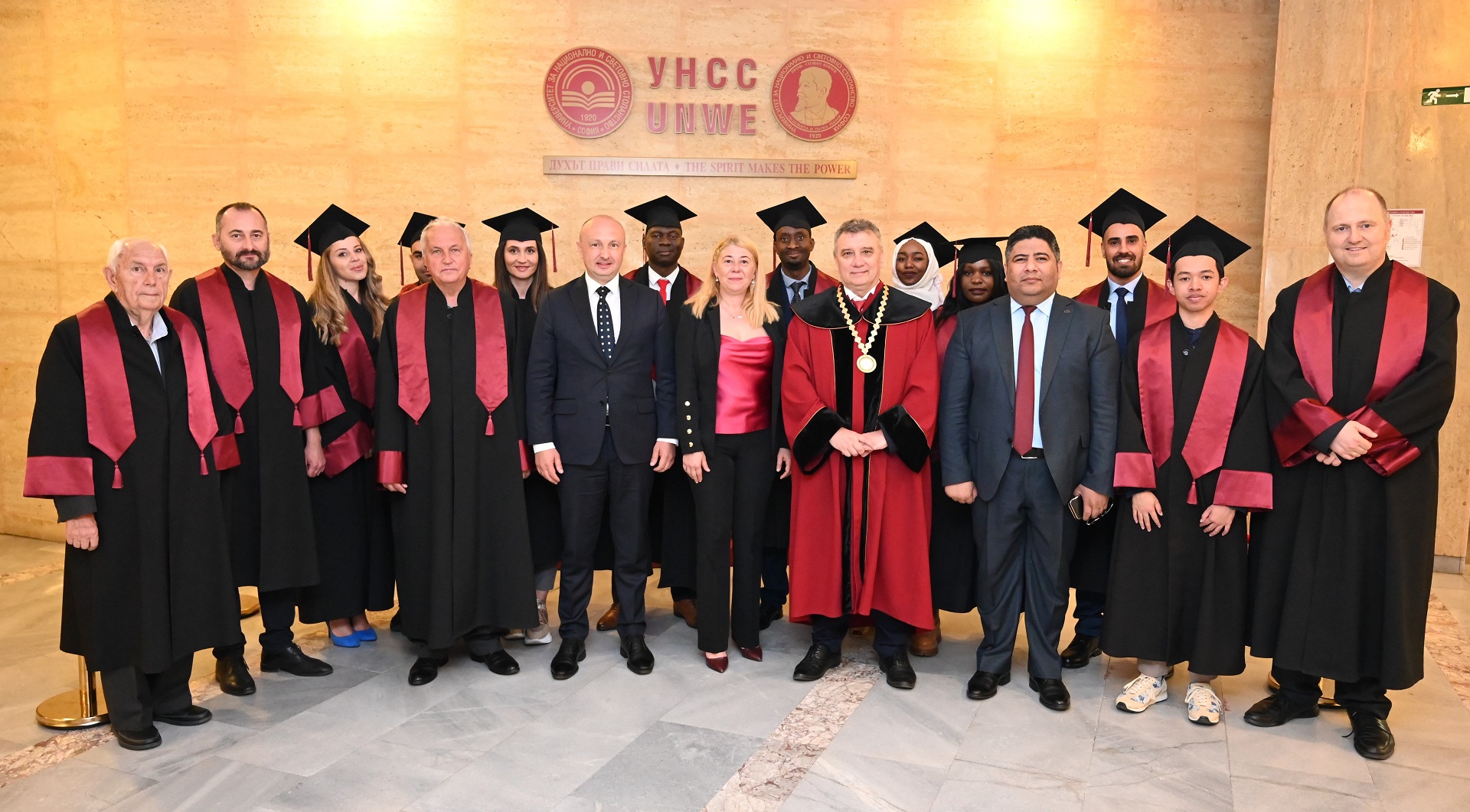
Since its inception, students from more than ten countries have successfully graduated from the program, including Bulgaria, Jordan, Lebanon, the Democratic Republic of Congo, Yemen, Iran, Nigeria, Zambia, Burkina Faso, Sudan, Mauritania, and Uganda, with some of them being IAEA scholarship recipients. The program continues to attract international cohorts and is preparing for the next admission cycle.
The training is conducted with the support of the IAEA, INSEN, the Bulgarian Nuclear Regulatory Agency, the Ministry of Energy, the Ministry of Foreign Affairs, and a consortium of more than ten Bulgarian and international universities, research institutes, governmental bodies, and nuclear facilities. The program lasts three semesters and has been developed in accordance with national educational requirements and international standards of IAEA Nuclear Security Series No. 12.
Educational Objectives
The Master's program aims to train highly qualified specialists for the needs of the nuclear energy sector, related industries, and government bodies responsible for the regulation and security of nuclear materials.
Lectures, exercises, and coursework are conducted entirely in English to reinforce and develop the students’ language skills, as well as their knowledge of specialized terminology in the field of nuclear security.
Students gain access to training materials provided by an international team of lecturers, as well as the opportunity to interact with representatives of the public and private sectors.
Professional realization
Graduates of the master’s program “Economics of Defense and Security” with a specialization in “Nuclear Security” can find professional realization in the following areas:
- Experts in nuclear security within the government administration regulating nuclear energy.
- Investigative and law enforcement bodies – the Ministry of Interior, the State Agency for National Security, and the Customs Agency.
- Private security companies
- International organizations
- Research institutes in the field of nuclear energy
- Managers and security experts at nuclear facilities – nuclear power plants, fuel cycle facilities (mines, enrichment plants, nuclear material storage sites), transport companies licensed to handle nuclear materials, and medical institutions using radioactive sources
General Information
Specialization | “Economics of Defence and Security” with a specialization in “Nuclear Security” |
Professional field | Economics |
Educational - qualification degree | Master’s degree (Master of Science) |
Form and duration of the program | Full-time study, 1.5 years (3 semesters) |
Credits | 100 |
Form of completion | Master’s Thesis |
Semester fee – state-funded studies | - |
Semester fee – tuition-based studies | 2.150 BGN |
Curriculum | |
Academic Schedule | |
Structure
| Course | Focus |
|---|---|
Introduction to Nuclear Security | Fundamental Concepts, Principles, and Key Terms |
International and National Regulatory Framework | International Conventions, National Laws, and Regulations |
Nuclear Energy, Fuel Cycle, and Applications | Nuclear Technologies, Fuel Cycle Stages, and Practical Applications |
Threat Assessment | Identification, Analysis, and Assessment of Potential Threats |
Technologies and Systems for Physical Protection | Technical Means and Systems for the Protection of Nuclear Facilities |
Security in the Transport of Nuclear and Radioactive Materials | Safety and Security Measures During Transport |
IT / Cybersecurity in the Nuclear Sector | Protection of Critical Information Systems and Infrastructures |
Nuclear Security at Mass Events | Specialized Measures for Large Public Events |
Faculty Staff
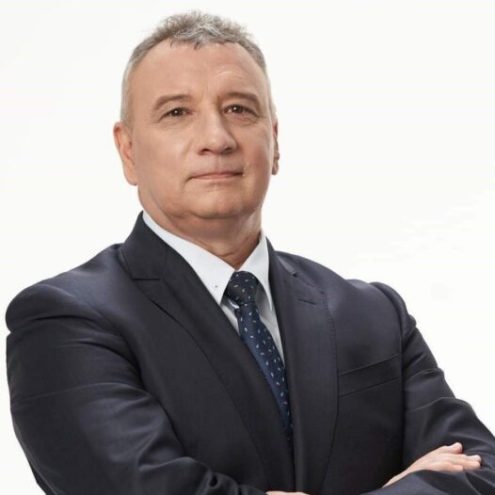
Prof. Dr. Dimitar Dimitrov
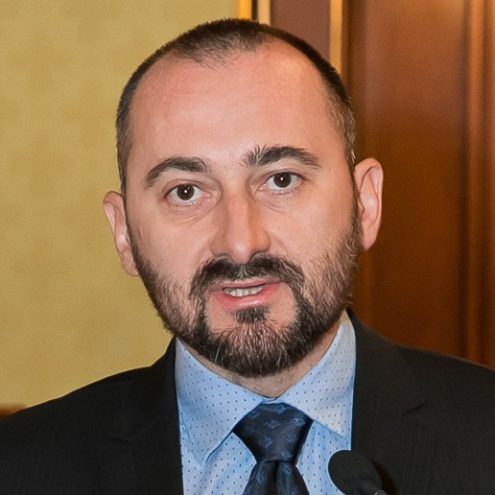
Prof. Dr. Svetoslav Spasov
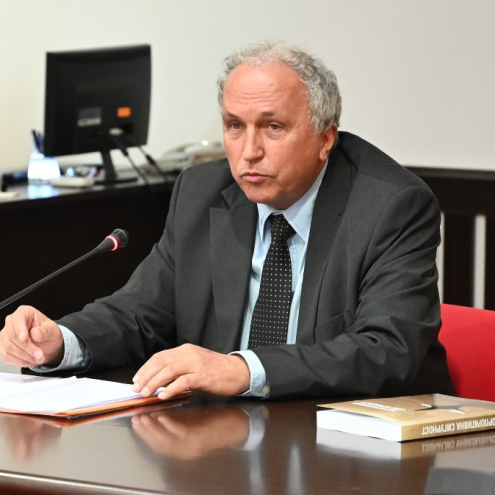
Prof. Dr. Tsvetan Tsvetkov