The Department of "National and Regional Security" is the leading department for the International Master’s Program *Economics of Defence and Security* with a specialization in "Nuclear Security", taught in English. The program is the result of an agreement signed between UNWE and the IAEA (International Atomic Energy Agency) for cooperation in the field of education and research in July 2014.
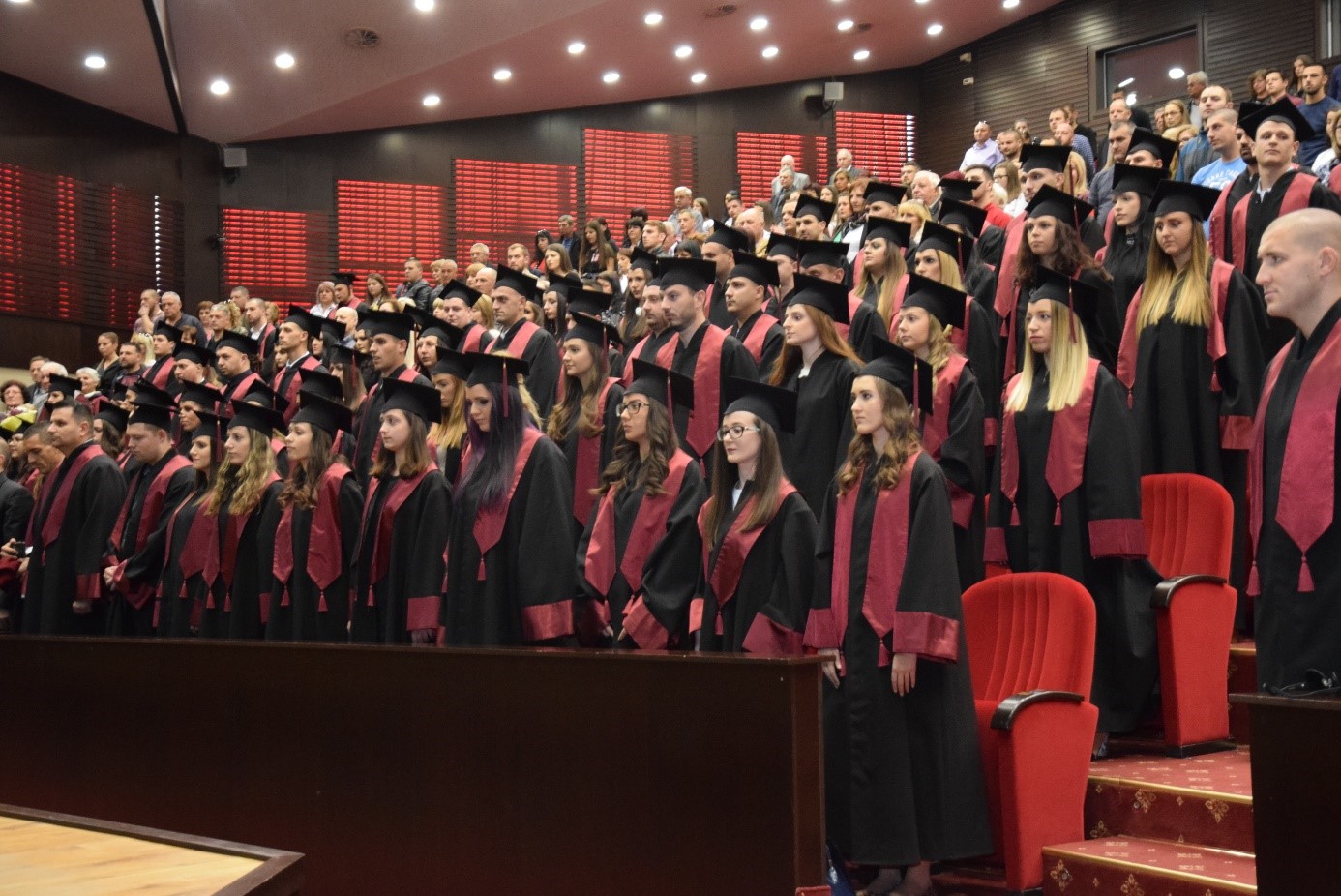
UNWE has been admitted as a member of the International Nuclear Security Education Network (INSEN), with the Department of “National and Regional Security” (DNRS) designated as the university’s primary representative in the network. INSEN comprises over 45 countries and more than 120 organizations, including universities, research centers, non-governmental organizations, and others. In June 2017, the first group of students graduated from this program. Students from seven countries received their diplomas from the Minister of Energy, Ms. Temenuzhka Petkova. Since then, dozens of students from Bulgaria and other countries—among them Jordan, Lebanon, Nigeria, Burkina Faso, Mauritania, Iran, South Africa, Vietnam, Yemen, the Democratic Republic of Congo, and others—have successfully completed the program. The Master’s program “Defense and Security Economics” with a specialization in “Nuclear Security” is a multidisciplinary training program designed in accordance with the IAEA requirements for developing master’s programs, as outlined in document number 12 of the so-called “Nuclear Security Series” (NSS 12). The Master’s program aims to prepare highly qualified managerial personnel for the needs of the nuclear energy sector, related industries, and administrative bodies responsible for regulating the use of nuclear materials. All lectures, exercises, and coursework are conducted exclusively in English, providing students with a unique opportunity to strengthen and enhance their language skills while learning and applying the specialized terminology of nuclear security. Students gain access to extensive informational resources provided by an international team of instructors, as well as opportunities to engage with representatives from governmental bodies and industry stakeholders in the field. The program has the following characteristics: - - Instruction is conducted in English;
- - Duration of 1.5 years – 3 semesters, full-time study (modular format);
- - 16 courses – 10 mandatory and 6 elective.
The mandatory courses cover topics and provide essential knowledge in areas such as nuclear technologies, the legal framework for their use, prevention and protection against criminal and malicious acts, investigation and analysis, radiation protection, and more. The elective courses aim to offer additional specialization for future security managers in specific fields. The Department of "National and Regional Security" has extensive experience in developing and teaching master’s programs in areas related to nuclear security, such as corporate security. At the same time, training in nuclear security requires expert knowledge from numerous fields, which is why the program involves specialists from several institutes of the Bulgarian Academy of Sciences, including the Institute of Metal Science; professionals from state institutions such as the Nuclear Regulatory Agency; lecturers from other universities, including the Technical University of Sofia and Sofia University “St. Kliment Ohridski”; faculty members from other departments of UNWE; as well as practitioners and experts from companies within the nuclear industry. With the support of the IAEA, lecturers from King’s College London (UK), the Middlebury Institute of International Studies at Monterey (USA), and other countries including Belgium, Greece, and Romania have also taught in the program over the years. Graduates of the Master’s program “Defense and Security Economics” with a specialization in “Nuclear Security” can pursue professional careers in the following areas: - - Managers and security experts in nuclear facilities – nuclear power plants, factories related to the nuclear fuel cycle (mines, enrichment plants, nuclear material storage sites), transport companies licensed to handle nuclear materials, or medical institutions utilizing nuclear materials;
- - Nuclear security specialists within government administration bodies responsible for regulating nuclear energy;
- - Investigators and law enforcement authorities – Ministry of Interior, State Agency for National Security (SANS), Customs Administration;
- - Private security companies;
- - International organizations;
- - Research organizations in the nuclear energy sector.
Requirements for Students and Forms of Study Master’s program "Economics of Defence and Security" with a specialization in "Nuclear Security", full-time study, three semesters. Applicants who hold a Bachelor’s or Master’s degree, regardless of their field of study or year of graduation (except those with a “Professional Bachelor” degree), are eligible to apply for the master’s program. The program offers the following application options: - State-funded, full-time study – Bulgarian students who have completed a Bachelor’s or Master’s degree at UNWE or other accredited universities in the Republic of Bulgaria
(currently not offered – as of September 2018).
- Paid form, full-time study – all applicants who hold a Bachelor’s or Master’s degree, regardless of their field of study or year of graduation (excluding those with a Professional Bachelor’s degree) – for Bulgarian students and students from EU member states;
- Paid form, full-time study – for students from countries outside the European Union.
Required criteria for prospective students: - - a Bachelor’s or Master’s degree diploma, regardless of the professional field;
- - proficiency in English, demonstrated by a diploma from an English-language secondary school or an equivalent document, or by an English language proficiency certificate – IELTS 6.0 or an equivalent score, B2 level or higher (corresponding to a minimum of 360 hours), issued by a language center in accordance with the CEFR (Common European Framework of Reference for Languages);
- - other equivalent documents;
- - an English language proficiency test administered by UNWE, if the applicant does not possess an appropriate English language certificate.
IMPORTANT: Prospective students are kindly requested to send a scanned copy of the document certifying their language proficiency in advance. After the document is reviewed by UNWE, it will be determined whether the applicant meets the requirements or needs to take an English language exam. This helps save time and avoids additional formal procedures. Please send the documents to the program’s email address: nusec@unwe.bg Individuals are eligible to pursue a Master’s degree if their overall grade from their completed higher education degree (Bachelor’s or Master’s) is not lower than “Good.” The overall grade is calculated as the arithmetic mean of the state exam grade(s) and the average grade obtained during the course of study. The admission score for applicants to the master’s program "Economics of Defence and Security" with a specialization in "Nuclear Security", full-time study, three semesters, is calculated as the sum of the following grades: - - the overall grade from the completed higher education degree (calculated as the arithmetic mean of the average grade from all courses included in the curriculum and the average grade from the state exam(s) and/or thesis defense);
- - the grade from the competitive entrance examination for the master’s program.
The application procedures and schedule, as well as the tuition fees for the different forms of study, can be found at the program’s official website. and on the UNWE website for master’s admission. The department offers opportunities for internships during the course of study and traditionally maintains close contact with its alumni. During their studies, students receive a permanent, unique email address from the department. They have access to the UNWE library, a building with wireless internet, a modern university sports complex, as well as the department’s dedicated information environment, which includes computer labs, an internal information system, and advanced information technologies for data collection and processing. Some students participate in the department’s research projects and take part in conferences and publications, with the possibility of continuing their education at the doctoral level. Classes are conducted on a modular basis, typically on Fridays, Saturdays, and Sundays, or in the evenings on weekdays during the semester. Students work on case studies and various course assignments, participate in discussions, prepare multimedia presentations, and collaborate in teams within simulation exercises. The program concludes with a state examination – the defense of a master’s thesis on a chosen topic. Throughout their studies, students receive academic and methodological support from faculty and engage in interactive learning. Course materials and presentations supporting the learning process are published on the department’s website, many of which are provided by INSEN. All students receive a permanent email address with the extension @e-dnrs.org, which serves as a contact channel during their studies and thereafter. Contact person: Chief Assist. Prof. Ekaterina Bogomilova, PhD, Program Coordinator Official e-mail: ebogomilova@unwe.bg , nusec@unwe.bg
Private e-mail: ebogomilova@e-dnrs.org
Phone: (02) 8195 291
Room: 5029 |