Defense and Security Economics, specialization “Nuclear Security,” taught in English, 3 semesters
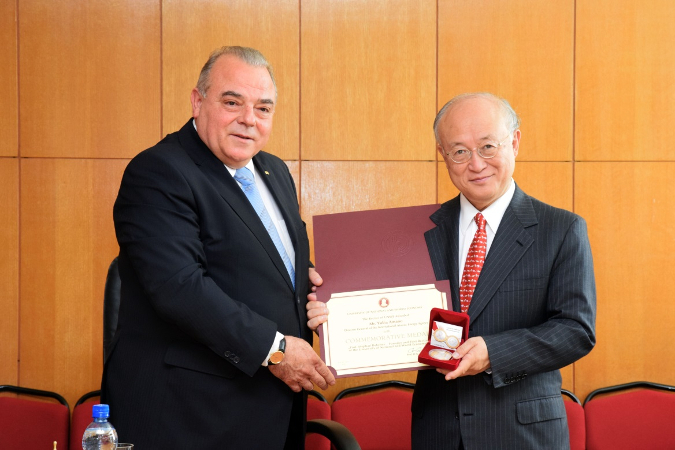
The Department of “National and Regional Security” is the leading department for the International Master’s Program in “Defense and Security Economics” with a specialization in “Nuclear Security,” taught in English. The program is the result of a cooperation agreement in the field of education and research, signed between UNWE and the IAEA (International Atomic Energy Agency) in July 2014 by the Rector of UNWE, Prof. Stati Statev, and the Director General of the Agency, Mr. Yukiya Amano. The agreement was renewed in February 2019 for a new three-year period.
UNWE has been admitted as a member of the International Nuclear Security Education Network (INSEN), with the Department of “National and Regional Security” (DNRS) designated as the university’s primary representative in the network. INSEN comprises over 45 countries and more than 120 organizations, including universities, research centers, non-governmental organizations, and others.
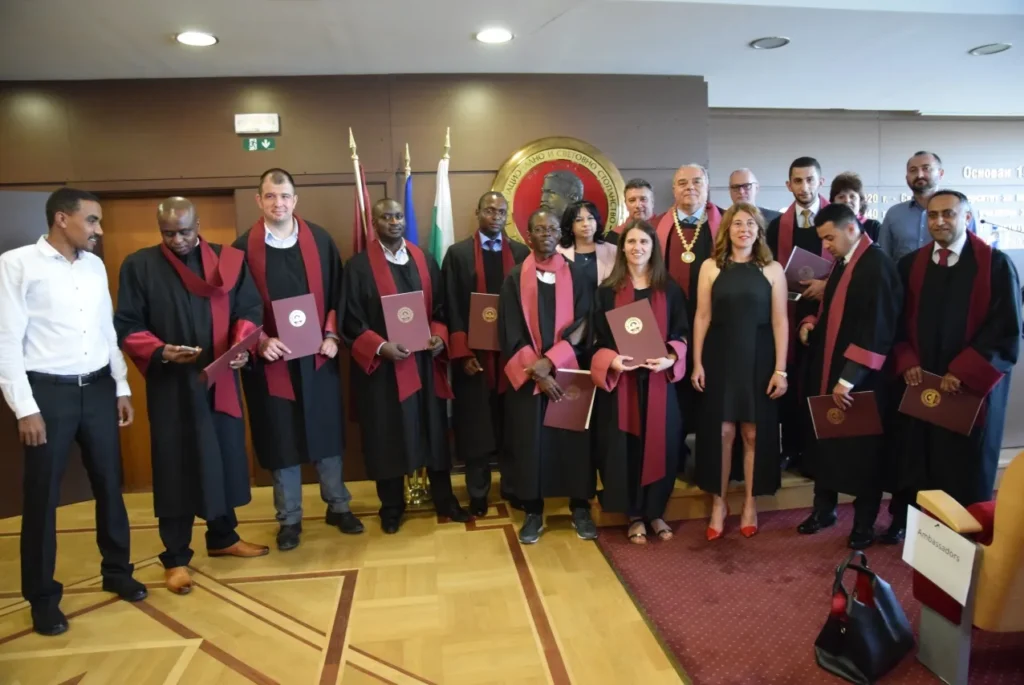
In June 2017, the first cohort of master’s students in this program graduated. Students from seven countries received their diplomas from the Minister of Energy, Ms. Temenuzhka Petkova. In 2018 and 2019, the next two cohorts of Bulgarian and international students graduated, representing countries such as Jordan, Lebanon, Nigeria, Burkina Faso, Mauritania, Iran, South Africa, Yemen, the Democratic Republic of Congo, and others.
The Master’s program “Defense and Security Economics” with a specialization in “Nuclear Security” is a multidisciplinary training program designed in accordance with the IAEA requirements for developing master’s programs, as outlined in document number 12 of the so-called “Nuclear Security Series” (NSS 12).
The Master’s program aims to prepare highly qualified managerial personnel for the needs of the nuclear energy sector, related industries, and administrative bodies responsible for regulating the use of nuclear materials.
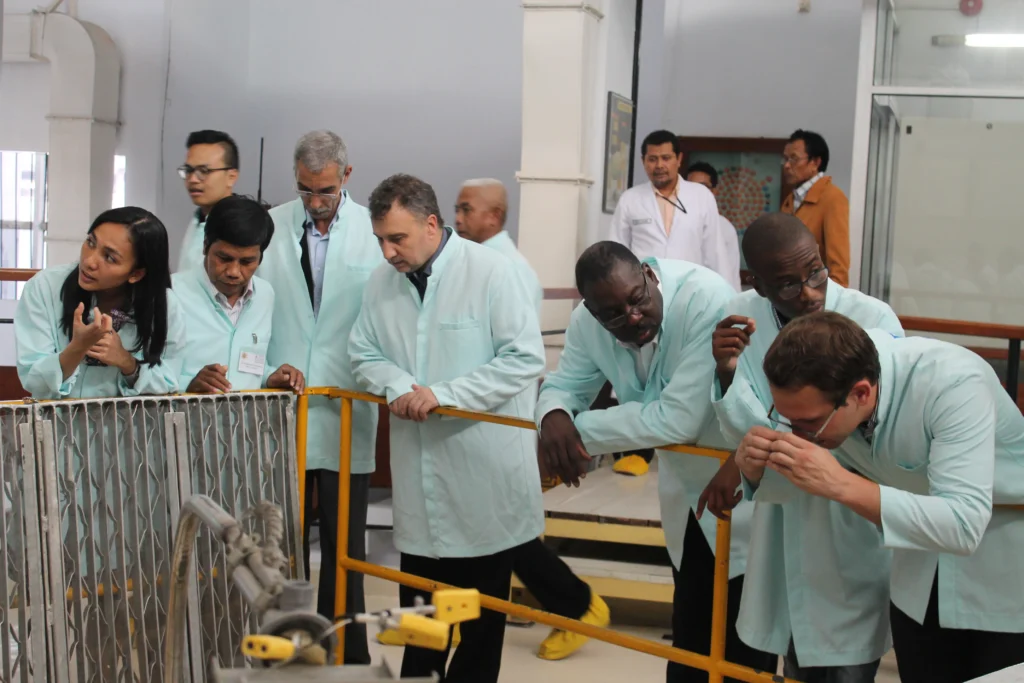
All lectures, exercises, and coursework are conducted exclusively in English, providing students with a unique opportunity to strengthen and enhance their language skills while learning and applying the specialized terminology of nuclear security. Students gain access to extensive informational resources provided by an international team of instructors, as well as opportunities to engage with representatives from governmental bodies and industry stakeholders in the field.
The program has the following characteristics:
- Instruction is conducted in English;
- Duration of 1.5 years – 3 semesters, full-time study (modular format);
- 16 courses – 10 mandatory and 6 elective.
The mandatory courses cover topics and provide essential knowledge in areas such as nuclear technologies, the legal framework for their use, prevention and protection against criminal and malicious acts, investigation and analysis, radiation protection, and more. The elective courses aim to offer additional specialization for future security managers in specific fields.
The Department of National and Regional Security has substantial experience in developing and delivering master’s programs in fields related to nuclear security, such as corporate security. At the same time, education in nuclear security requires expert knowledge across multiple disciplines. For this reason, the training program involves specialists from several Bulgarian Academy of Sciences institutes, including the Institute of Metal Science, representatives from state administration such as the Nuclear Regulatory Agency, other universities including the Technical University of Sofia and Sofia University “St. Kliment Ohridski,” faculty from other UNWE departments, as well as practitioners and companies from the nuclear industry. With the support of the IAEA, participation has also been arranged for lecturers from King’s College London (UK), the Middlebury Institute of International Studies at Monterey (USA), Greece, Belgium, Romania, and other countries.
Graduates of the Master’s program “Defense and Security Economics” with a specialization in “Nuclear Security” can pursue professional careers in the following areas:
- Managers and security experts in nuclear facilities – nuclear power plants, factories related to the nuclear fuel cycle (mines, enrichment plants, nuclear material storage sites), transport companies licensed to handle nuclear materials, or medical institutions utilizing nuclear materials;
- Nuclear security specialists within government administration bodies responsible for regulating nuclear energy;
- Investigators and law enforcement authorities – Ministry of Interior, State Agency for National Security (SANS), Customs Administration;
- Private security companies;
- International organizations;
- Research organizations in the nuclear energy sector.
Requirements for Students and Forms of Study
In the Master’s program “Defense and Security Economics” with a specialization in “Nuclear Security”, full-time, 3 semesters, all graduates holding a Bachelor’s or Master’s degree are eligible to apply, regardless of their field of study or year of graduation (except those who have obtained a Professional Bachelor’s degree).
The department offers opportunities for internships during the course of study and traditionally maintains close contact with its alumni. During their studies, students receive a permanent, unique email address from the department. They have access to the UNWE library, a building with wireless internet, a modern university sports complex, as well as the department’s dedicated information environment, which includes computer labs, an internal information system, and advanced information technologies for data collection and processing. Some students participate in the department’s research projects and take part in conferences and publications, with the possibility of continuing their education at the doctoral level.
Classes are conducted on a modular basis, typically on Fridays, Saturdays, and Sundays, or in the evenings on weekdays during the semester. Students work on case studies and various course assignments, participate in discussions, prepare multimedia presentations, and collaborate in teams within simulation exercises. The program concludes with a state examination – the defense of a master’s thesis on a chosen topic. Throughout their studies, students receive academic and methodological support from faculty and engage in interactive learning. Course materials and presentations supporting the learning process are published on the department’s website, many of which are provided by INSEN. All students receive a permanent email address with the extension @e-dnrs.org, which serves as a contact channel during their studies and thereafter.