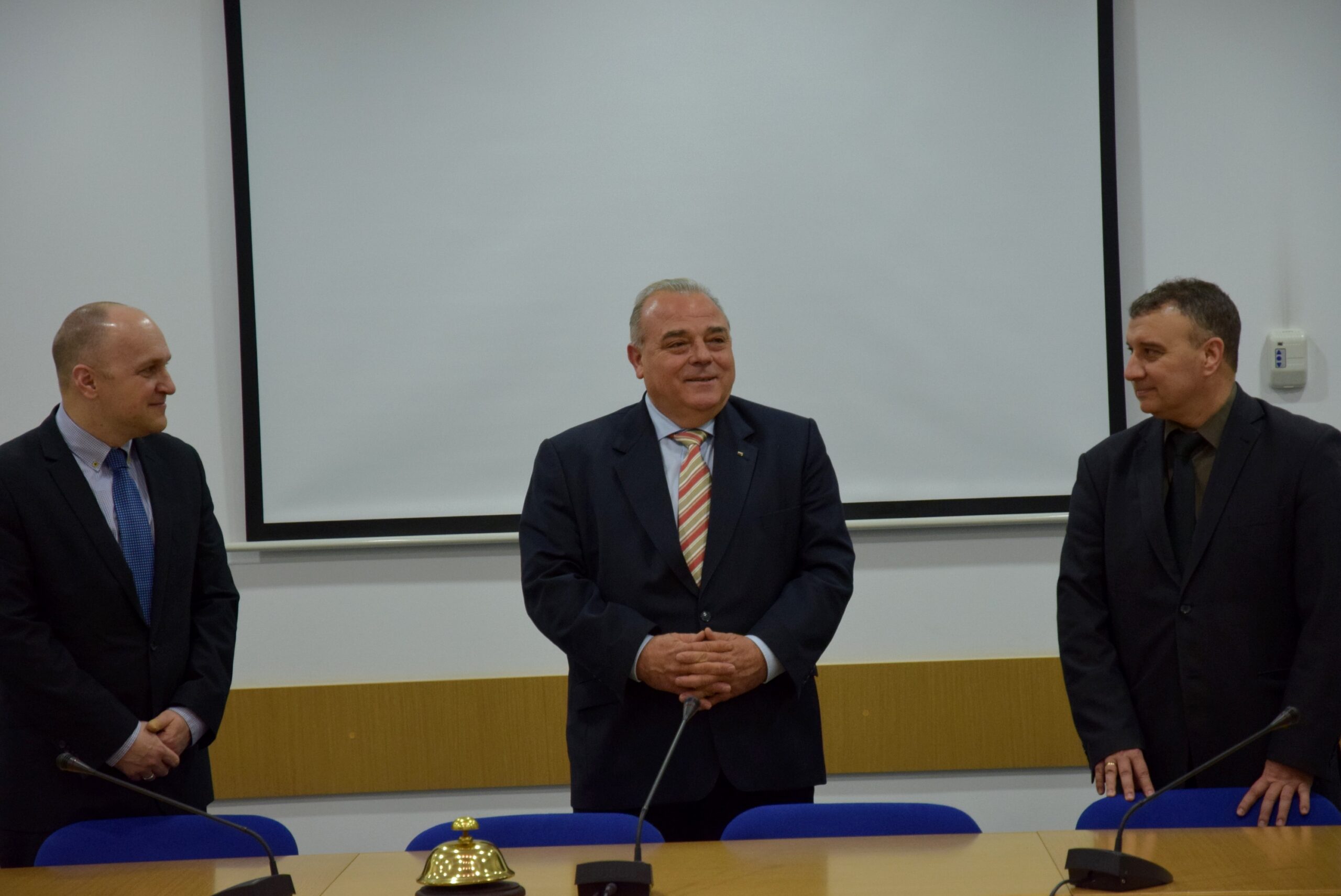
The Rector inaugurated Bulgaria’s first international Master’s program in Nuclear Security.
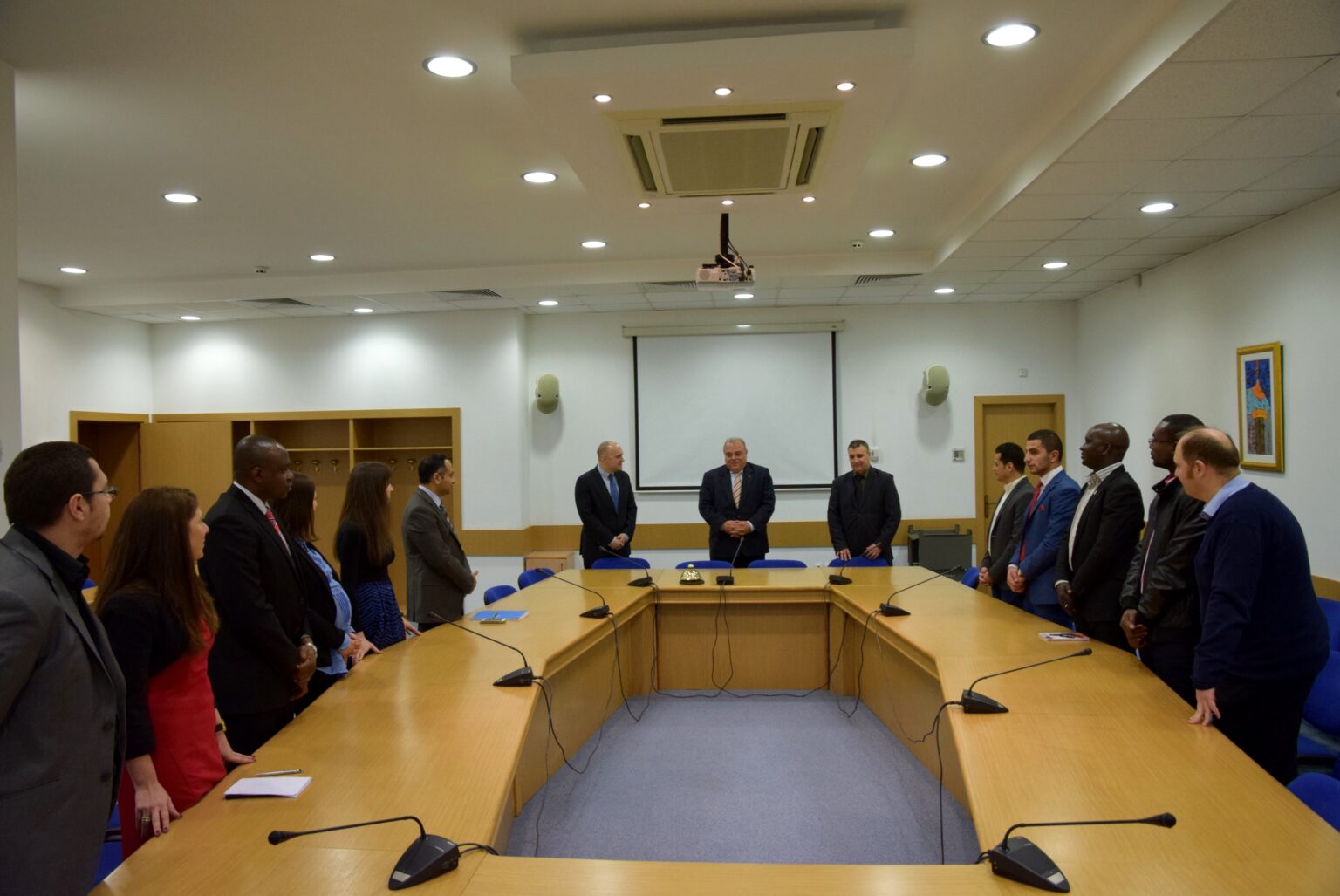
At a ceremonial event, the Rector of UNWE, Prof. Stati Statev, officially inaugurated the international Master’s program in Nuclear Security. “I believe that this first-of-its-kind Master’s program in Bulgaria will be successful and will achieve high educational results,” he stated. The Rector wished “Good luck!” to both Bulgarian and international Master’s students and their instructors. Attendees included Mr. Dmitriy Nikonov from the Nuclear Security Department of the International Atomic Energy Agency (IAEA) in Vienna, Austria, Prof. Dr. Dimitar Dimitrov, Head of the Department of National and Regional Security and Dean of the Faculty of Infrastructure Economics at UNWE, as well as the students enrolled in the program and the teaching staff.
The program was developed and is implemented under the cooperation agreement between UNWE and the IAEA, signed by Rector Prof. Stati Statev and IAEA Director General Yukiya Amano during his visit to Sofia in June 2014. Prof. Dr. Dimitar Dimitrov serves as the program coordinator on behalf of the university.
The international master’s program aims to train highly qualified managerial personnel for the needs of nuclear security. In its first cohort, eleven students from seven countries (Bulgaria, Burkina Faso, Zambia, Iraq, Jordan, Nigeria, Lebanon) are enrolled, some of them IAEA scholarship recipients. The program is taught in English, lasts two years, and combines theoretical and practical instruction, including 22 courses, laboratory exercises, technical visits, simulations, and more.
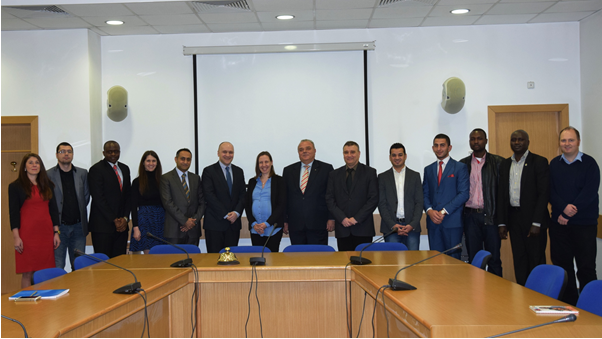
The program’s teaching team includes faculty from the Department of “National and Regional Security” and other departments at UNWE, professors from Sofia University “St. Kliment Ohridski,” researchers from the Institute of Metal Science, Equipment and Technologies “Acad. Angel Balevski” with the Center for Hydroaerodynamics at BAS, experts from the Bulgarian Nuclear Regulatory Agency, the Technical University of Sofia, and several international universities. Methodological support is provided by the IAEA and the International Nuclear Security Education Network (INSEN), of which UNWE became a member in mid-2014.