Project with Regional Significance: “The Belene Nuclear Power Plant site is highly suitable for Small Modular Reactors (SMRs).”
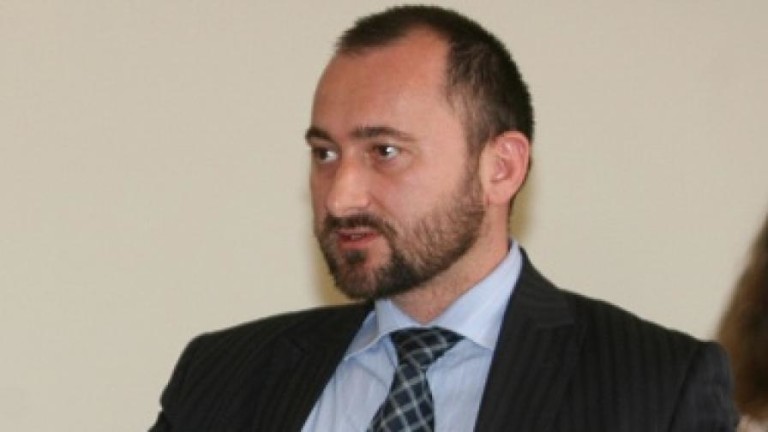
In my opinion, both reactors at the Belene NPP site should be sold, and we should focus on new technologies — Small Modular Reactors (SMRs). This statement was made in the Money.bg studio by Prof. Dr. Svetoslav Spasov, Director of the Center for Nuclear Security Support at UNWE, who has been a full member of the European Small Modular Reactor Alliance since March. According to him, the Belene site is “highly suitable” for constructing this type of project, as over BGN 2 billion have already been invested there, and pre-project studies have been completed.
“If there are funds — for example, this year for a 100 MW small modular reactor, next year there could be funds for another 100 MW, and thus the modules would be lined up one after another until the country’s needs are met,” he outlined a possible scenario.
What Small Modular Reactors (SMRs) Are
“Small Modular Reactors are essentially reactors with a capacity between 3 and 500 MW. The two reactors currently at the Kozloduy NPP each have a capacity of 1 GW,” the guest explained.
He emphasized that Small Modular Reactors have existed for quite a few years worldwide. They are mostly associated with nuclear submarines, meaning they have been used by the military and by nuclear power plants on a global scale.
In recent years, the topic of Small Modular Reactors has become quite relevant. “The main issue here is their safety — we are talking about nuclear safety. For example, whether a small modular reactor can be installed in a building like the one we are currently in, or at a university like UNWE, or at some enterprise,” stated Prof. Spasov.
“Most people imagine that a small modular reactor is portable and could be used anywhere, but in reality, this is not the case. From the perspective of nuclear safety and security, it could be a target for terrorist attacks, which could exploit it for malicious purposes. Therefore, it is not possible to install a small modular reactor just anywhere,” he added.
A very important aspect of such projects is public opinion, the expert believes. “For example, this could also be done in the city of Sofia. The Sofia TPP has issues, as it is responsible for the city’s heating, and a small modular reactor could help support this process.”
But here arises the question of so-called public acceptance — whether the people in Sofia would accept having a small modular nuclear reactor in the city center,” he further commented.
In which sectors could such a project be beneficial?
It turns out that Small Modular Reactors are not so easy to implement, but in return, they can bring benefits in various areas.
First, for balancing the electricity transmission network.
“We see that this year there were three incidents related to the collapse of the electricity transmission network. This happened in Spain, Portugal, and in our neighbor North Macedonia. That is, an SMR could play the role of balancing power,” commented Svetoslav Spasov.
A large nuclear reactor (like those at the Kozloduy NPP) has a certain technological time required for shutdown and start-up — it takes a week or more, the guest pointed out. “Meanwhile, a small modular reactor can be shut down and started up almost instantly, like the lights in this studio. When there is a peak in solar power, an SMR can ‘absorb’ that peak,” he stated in the studio.
SMRs can be useful not only for balancing the grid and storing energy, but a small modular reactor can also be used for green hydrogen production.
“You know, this is a strategic direction for the future of the EU, and its production requires a lot of electricity. A small modular reactor can provide this energy,” the expert stated emphatically, adding that there is another possible application — desalination of seawater.
“We see that the climate in Bulgaria is changing — from temperate, it is becoming almost subtropical. In many places, we can already see palm trees and olive trees. The climate of Greece is gradually moving into our region.”
But this also brings water scarcity — many reservoirs are empty, many cities are left without water, and farmers have nothing to irrigate their crops with. The authorities prioritize drinking water over irrigation.
In this sense, if a small modular reactor is used for desalination — a process that also requires a lot of electricity — seawater can be turned into a resource for bathing, irrigation, and solving a major problem in Bulgaria,” Prof. Spasov explained.
Cross-Border Project in the Region
The Director of the Center for Nuclear Security Support also commented on a potential cross-border project in the region. It could be implemented in Belene, but for it, “we should also invite our neighbors such as Greece, North Macedonia, Serbia, and Albania, which do not have nuclear capacities.”
Their societies do not agree to have nuclear power plants, but in our country, the public accepts this investment, which is being made for the first time in over 50 years. We have public acceptance of the production of such electricity.
These countries need balancing capacities and could participate in a larger Balkan project based in Belene. This way, the problems arising from the large solar investments in their own countries could be solved,” he stated emphatically.